

Last reviewed: 21 October 2026 against the Zimbabwe Parks and Wildlife Management Authority (ZimParks) Matusadona National Park page, the official ZimParks 2026 tariff, African Parks’ 2019 press release on the management agreement, reports of the June 2026 black rhino reintroduction, and lodge operators’ own websites. Fees and access change. Check with ZimParks, African Parks or your lodge before you travel.
Matusadona at a glance
Why go
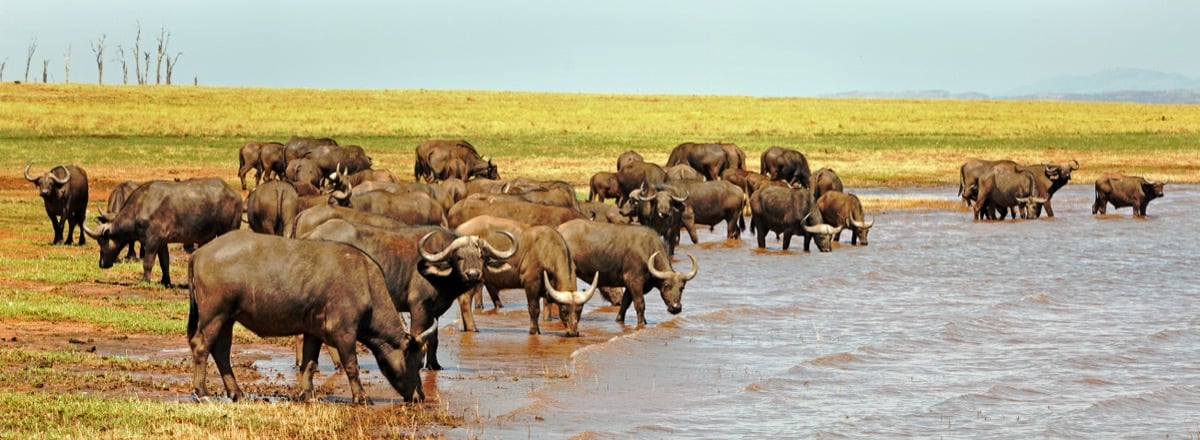
- Safari from the water. Game viewing by boat along the shoreline is the park’s speciality. Elephant, buffalo, hippo and crocodile gather on the lake edge in the dry season.
- Few visitors. There is no quick road access, so the park is quiet even in peak season.
- A park on the way back. African Parks and ZimParks are restoring the park after heavy poaching. Black rhino were reintroduced in 2026.
- The Sanyati Gorge on the park’s eastern boundary, reached by boat.
Getting there
- By boat from Kariba: ZimParks says the park is reached through Kariba, from Lake Harvest or Chawara harbour. Lodges arrange boat transfers, and houseboats cruise across from Kariba’s harbours. Crossing times depend on where you stay and the weather on the lake, so ask your lodge.
- By air: there is an airstrip at Tashinga, the park headquarters, for private and charter aircraft. You need permission from Tashinga before you land. Lodges can arrange charter flights from Kariba, Harare or Victoria Falls.
- By road: take the Binga road from Karoi and enter the park through its southern boundary at Chifudze substation. From there it is 68 km to Tashinga (ZimParks). The route is remote gravel and needs a 4x4. Karoi is on the Harare–Chirundu road. See travel distances.
Park fees in 2026
The overnight rate is the same as the day rate. A foreign-registered car pays US$5 a day. Source: ZimParks De-Gazetted Tariff 2026. Lodges often include park fees in their rates, so check before you pay. See all park fees.
Wildlife
ZimParks lists elephant, lion, buffalo and leopard, with impala, kudu and other plains game, and a wide range of birds.Black rhino are back
Matusadona was once a stronghold for black rhino and elephant, but poaching “virtually eliminated” its black rhino, in African Parks’ words. On 3 June 2026, ZimParks and African Parks airlifted a founder group of black rhino into the park, sourced from Imire Rhino and Wildlife Conservancy, Matobo National Park and one undisclosed location. The animals are being held in bomas and released in phases into a 175 km² Intensive Protection Zone, each with a tracking device. Discover Africa reports that the founder group is 17 animals. Rhino sightings are not guaranteed while the animals settle. Ask your lodge whether rhino tracking is offered.What you see from the boat
In the dry season, the grassland along the shore draws elephant and buffalo down to the water’s edge. Hippo and crocodile are common in the bays. The drowned trees standing in the lake are perches for fish eagles and cormorants.Where to stay
Lodge rates change by season, so check prices directly with each operator.- Inside the park: Changa Safari Camp and Rhino Safari Camp, which its operator describes as a bush camp on a private concession on the lake shore within the park.
- On the lake nearby: Spurwing Island, on the lake below the Matusadona Mountains, and Bumi Hills Safari Lodge (African Bush Camps), on the lake shore outside the park.
- Houseboats: many houseboats from Kariba cruise the Matusadona shoreline. See Lake Kariba.
- ZimParks: the park headquarters is at Tashinga. The 2026 ZimParks tariff does not list Matusadona accommodation, so ask ZimParks what camping is open before you plan a self-drive visit.
When to go
- Dry season (May to October): the best game viewing, as animals concentrate on the lake shore. October is very hot.
- Rainy season (November to April): hot and humid, with afternoon storms. Animals spread inland, the road in becomes harder, and storms can make the lake rough.
Practical tips
- Bring everything you need if you’re self-driving or camping. ZimParks lists binoculars, food for your whole stay, a first aid kit, a tent, a sleeping bag and a torch. There are no shops in the park.
- Wear earthy colours. ZimParks asks visitors to avoid bright red, yellow and bright green.
- Keep clear of elephants with calves and lions with cubs.
- Don’t swim in the lake. Crocodiles and hippos are common. Follow your guide or skipper.
- Malaria is present in the Zambezi Valley. Get advice from a travel health clinic. See health and safety.
Related guides
Lake Kariba
Mana Pools
Park fees 2026
Sources
- Zimbabwe Parks and Wildlife Management Authority (ZimParks) — Matusadona National Park, accessed 21 October 2026
- Zimbabwe Parks and Wildlife Management Authority (ZimParks) — De-Gazetted Tariff 2026, accessed 21 October 2026
- African Parks — Press release: African Parks to manage Matusadona National Park, Zimbabwe (republished by African Elephant Journal, 3 November 2019), accessed 21 October 2026
- ATTA — Black rhino return to Zimbabwe’s Matusadona National Park (source: African Parks, 5 June 2026), accessed 21 October 2026
- Discover Africa — Matusadona National Park news: black rhinos return (updated 9 June 2026), accessed 21 October 2026
- Changa Safari Camp — Home, accessed 21 October 2026
- Rhino Safari Camp — Home, accessed 21 October 2026
- Spurwing Island — Home, accessed 21 October 2026
- African Bush Camps — Bumi Hills Safari Lodge, accessed 21 October 2026