

Last reviewed: 21 October 2026 against the National Gallery of Zimbabwe’s visitor page, National Museums and Monuments of Zimbabwe (NMMZ) visitor information, Mukuvisi Woodlands’ own site, the official Zimbabwe Parks and Wildlife Management Authority (ZimParks) 2026 tariff and World Meteorological Organization climate normals. We removed opening hours, prices and business names we could not confirm. Full list under Sources.
Why visit Harare
While many travellers pass straight through on the way to Zimbabwe’s safari areas, Harare rewards those who linger with:- Contemporary urban life in Zimbabwe’s capital
- Museums and galleries covering the country’s history and art
- Green spaces, from Harare Gardens to the Mukuvisi Woodlands
- Busy markets for crafts and everyday shopping
- A lively arts scene, with galleries and theatre
- Easy day trips to rock art sites, lakes and caves
Top attractions
Museums and cultural sites
National Gallery of Zimbabwe
Zimbabwe’s national art institution, with changing exhibitions of Zimbabwean and African art, including stone sculpture.Details:
- Location: 20 Julius Nyerere Way, next to Harare Gardens
- Hours: daily 9:00 to 16:30, closed on public holidays
- Adult admission: US$15 for international (non-African) visitors, US$5 for African residents and US$2 for Zimbabwean residents
National Archives of Zimbabwe
Zimbabwe’s national collection of historical documents and photographs, used by researchers and open to visitors.Details:
- Location: Borrowdale Road, Gunhill
- The Archives’ website was not working when we checked, so confirm opening times locally before you go
National Heroes Acre
The national monument and burial ground for those declared national heroes, on a hill on the western side of the city, off the road to Bulawayo.Details:
- Respectful behaviour and dress expected
- Check visiting arrangements with National Museums and Monuments of Zimbabwe (NMMZ) before you go
Museum of Human Sciences
NMMZ’s regional museum for northern Zimbabwe, on Rotten Row, with archaeology and ethnography collections.Details:
- NMMZ lists its museums as open daily, 8:00 to 16:30
- NMMZ entrance fees range up to US$15, so check the price at the door
Parks and natural spaces
Harare Gardens
The city-centre public park beside the National Gallery, with lawns, mature trees and walking paths. It is popular with locals at weekends.
National Botanic Garden
Large gardens in Alexandra Park, planted with trees and shrubs from across Zimbabwe’s vegetation zones. Good for a quiet walk and birdwatching. Check opening times and fees at the gate.
Mukuvisi Woodlands
A woodland reserve in Harare’s eastern suburbs, a short drive from the city centre.Details:
- Open daily, 8:00 to 17:00
- Entry: US$6 adults, US$5 children aged 5 to 12, under-5s free, US$3 senior citizens
- Activities: walking, horse riding and bike riding, plus a coffee shop and gift shop
- You must sign an indemnity before you enter
Lake Chivero Recreational Park
A ZimParks recreational park about 32 km south-west of the city, around the reservoir that supplies Harare. Game viewing, birdwatching and fishing.2026 ZimParks conservation fees (per person per day): US$12 international, US$10 SADC, US$3 Zimbabwean. Vehicle fees are extra. See park fees and our Lake Chivero guide.
Markets and shopping
Mbare Musika: one of Zimbabwe’s largest and best-known markets, in the high-density suburb of Mbare. Fresh produce, household goods and crafts. It is busy and crowded, so go in the morning with a local guide and keep valuables out of sight.Craft and flea markets: Avondale and other suburban shopping centres host craft and flea markets. Prices are usually negotiable.Shopping centres: The northern suburbs, including Borrowdale and Avondale, have modern shopping centres with supermarkets, cafés and restaurants.
Neighbourhoods to explore
Central business district (CBD)
Central business district (CBD)
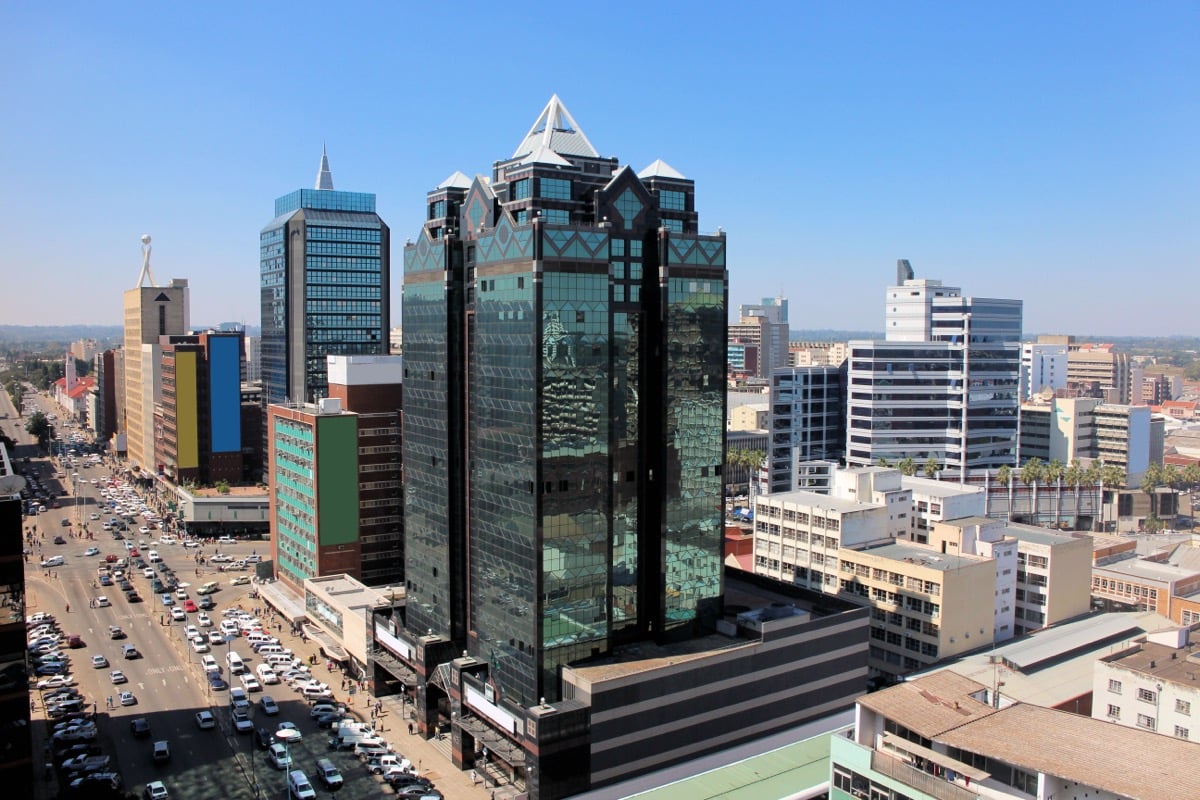
The historic heart of Harare, with Africa Unity Square, Parliament and Harare Gardens nearby.
- Best explored during business hours
- Quieter at weekends, when many businesses close
- Take normal urban precautions, especially after dark
Avondale and the Avenues
Avondale and the Avenues
Close to the centre, with shopping centres, cafés and restaurants, and many guesthouses. Comfortable for walking in daylight.
Borrowdale and the northern suburbs
Borrowdale and the northern suburbs
Leafy residential suburbs with shopping centres, restaurants, embassies and the racecourse. Spread out, so you will need a car or taxi.
Mbare
Mbare
One of Harare’s oldest high-density suburbs, home to Mbare Musika market and Rufaro Stadium. Visit with a local guide and be discreet with cameras.
Food and dining
Harare has the most varied dining in Zimbabwe, from local eateries to international restaurants, mostly in the northern suburbs and around shopping centres. Restaurants open and close often, so check recent reviews before you go. Dishes to try:- Sadza ne nyama (maize meal with meat stew)
- Muriwo une dovi (greens with peanut butter)
- Derere (okra)
- Madora (mopane worms), for the adventurous
Accommodation
Harare has hotels, lodges and guesthouses across all budgets. Hotels we could confirm on their operators’ own websites:
- The Rainbow Towers Hotel & Conference Centre and the New Ambassador Hotel, both run by Rainbow Tourism Group (RTG)
- Holiday Inn Harare, run by African Sun
- Northern suburbs: quieter, but you will need transport
- City centre: convenient by day, less pleasant at night
- Avondale and the Avenues: a good compromise
Practical information
How much time to spend
How much time to spend
- Minimum: one full day for the main sights
- Comfortable: two to three days
- Extended: four to five days, using Harare as a base for day trips
- Day 1: city centre, Harare Gardens and the National Gallery
- Day 2: markets and Mukuvisi Woodlands
- Day 3: day trip to Domboshawa or Lake Chivero
Getting around
Getting around
- Taxis: the easiest option for visitors. Agree the fare before you set off, or ask your hotel to arrange one
- Ride-hailing apps: check which apps work locally when you arrive
- Car hire: available at the airport and in the city. Zimbabwe drives on the left
- Kombis (minibuses): cheap but hard to use without local knowledge
Money
Money
US dollars are widely used, and the local currency, Zimbabwe Gold (ZiG), also circulates. Bring small US dollar notes, and don’t rely on ATMs accepting foreign cards. See our currency and money guide.
Safety and etiquette
Safety and etiquette
Safety tips:
- Take normal urban precautions and keep valuables out of sight
- Avoid walking at night, especially in the CBD
- Don’t photograph government buildings, police or military sites
- Greet people before getting down to business
- Dress conservatively in official and business settings
Day trips from Harare
Domboshawa
A granite dome about 30 km north of Harare, with rock paintings in a cave shelter near the top and wide views over the countryside.
- Allow half a day
- Local guides are available at the site
- Check the entrance fee on arrival
- Combine with nearby Ngomakurira for a full day
Great Zimbabwe
The UNESCO World Heritage site of stone ruins near Masvingo, best as an overnight trip.
- About 320 km from Harare, around 4 hours’ drive each way
- Entry fee set by National Museums and Monuments of Zimbabwe (NMMZ). NMMZ lists site fees of up to US$15 but not the current Great Zimbabwe rate, so check at the gate
- A guide adds a lot to the visit
Chinhoyi Caves
Limestone caves with a deep blue pool, about 125 km north-west of Harare on the road to Kariba.
- Full-day trip from Harare
- 2026 ZimParks conservation fee: US$12 international, US$10 SADC, US$5 Zimbabwean per day
Bushman Rock
A vineyard estate and private game reserve about 40 minutes’ drive from Harare, according to the estate.
- Day trips with wine tasting, game viewing and horse riding
- Book in advance: the estate says it does not accept walk-ins
Best time to visit
Harare sits at about 1,500 m, so it is rarely very hot. Average figures from the World Meteorological Organization (WMO):April to May
- Average highs of 24 to 26°C, lows of 9 to 12°C
- The rains have usually ended and the countryside is still green
- Average highs of about 22 to 24°C, lows of 6 to 8°C
- Almost no rain and clear skies. Bring layers for cold mornings and evenings
- The hottest months, with average highs of 28 to 29°C
- Jacaranda trees flower across the city in September and October
- Average highs of about 26°C, with most of the year’s rain falling in afternoon storms
- Green landscapes, but rain can disrupt outdoor plans
Harare for different travellers
Business travellers
- Most corporate offices are in the CBD and the northern suburbs
- Business etiquette is more formal than in many Western countries
- Power cuts happen, so carry a power bank and ask whether your hotel has a generator
Families
- Mukuvisi Woodlands for walks and horse riding
- Harare Gardens and the National Botanic Garden for space to run around
- Wild is Life, a wildlife sanctuary in Harare. Bookings are essential
- Lake Chivero for a day out with game viewing
Budget travellers
- Guesthouses in Avondale and the Avenues
- Local eateries and markets for cheap meals
- Harare Gardens is a public park
- Hire a local guide for Mbare Musika
Culture seekers
- National Gallery of Zimbabwe
- Reps Theatre
- Mbare Musika with a local guide
- Domboshawa’s rock paintings
Sources
- National Gallery of Zimbabwe — Visit us (hours and admission), accessed 21 October 2026
- National Museums and Monuments of Zimbabwe (NMMZ) — Visit, accessed 21 October 2026
- Mukuvisi Woodlands — official site (hours and entry fees), accessed 21 October 2026
- Zimbabwe Parks and Wildlife Management Authority (ZimParks) — De-Gazetted Tariff 2026, published February 2026, accessed 21 October 2026
- Rainbow Tourism Group (RTG) — hotels, accessed 21 October 2026
- African Sun — hotels, accessed 21 October 2026
- Bushman Rock Safaris — official site, accessed 21 October 2026
- Wild is Life — official site, accessed 21 October 2026
- World Meteorological Organization — World Weather Information Service, Zimbabwe, accessed 21 October 2026
- OpenStreetMap — approximate road distances from Harare, accessed 21 October 2026